
The fastest way to nail t-shirt sizing is to check the shoulder seam and chest measurement first. Grab a tee you already love, lay it flat, measure the chest width and where the shoulder seam sits, then match those numbers against the brand's garment chart. Bebe Fashion posts full garment charts on every product page, so you're comparing real numbers, not guessing from a size label.
TL;DR:
- Shoulder seam placement and the active reach test are critical to accurately assessing t-shirt fit and catching common sizing issues early.
- Matching your body or a well-fitting shirt's measurements to detailed flat garment charts predicts fit more reliably than relying solely on size labels.
- Body type influences which measurement matters most, with chest width key for athletic builds and length more important for short or tall frames.
- Fabric weight and shrinkage potential must be considered, especially for 100% cotton shirts that tend to shrink lengthwise after washing.
- For graphic or custom tees, sizing up ensures artwork remains proportional and visually appealing without distortion or stretching.
Table of Contents
- What Should You Check First When Sizing A T-Shirt?
- How To Measure A T-Shirt: Exact Flat Measurements
- How Do You Match A Body Type To A Size Chart?
- Choosing The Right Fit For Your Body Type
- Fabric Weight And Shrinkage: What Changes After The First Wash
- Five-Step Fit Test Before You Buy
- Sizing Tips For Tattoo-Inspired And Custom Graphic Tees
- Bebe Fashion's Take On Finding Your Size
- Shop Tattoo-Inspired Tees With Real Garment Charts
- Sources
What Should You Check First When Sizing A T-Shirt?
Run this checklist before you click "add to cart" or before you try one on in a fitting room. It takes about a minute and catches most fit problems before they become a return.
- Shoulder seam should sit at the bony corner of your shoulder, not halfway down your arm or bunched up near your neck.
- Chest pinch should allow a small amount of pinchable fabric on each side. Any tighter and the fabric strains across prints.
- Sleeve should end around mid-bicep without squeezing.
- Hem should land near the middle of your fly or zipper, and it shouldn't ride up when you reach overhead.
Shoulder seam placement and the reach test are the two deal-breakers on this list. Everything else has some wiggle room, but a shoulder seam sitting in the wrong spot or a hem that shoots up when you lift your arms means the shirt is the wrong size, full stop.
Pro Tip: Do the reach test in front of a mirror before you buy: raise both arms like you're grabbing something off a high shelf. If the hem climbs above your belt line, size up.
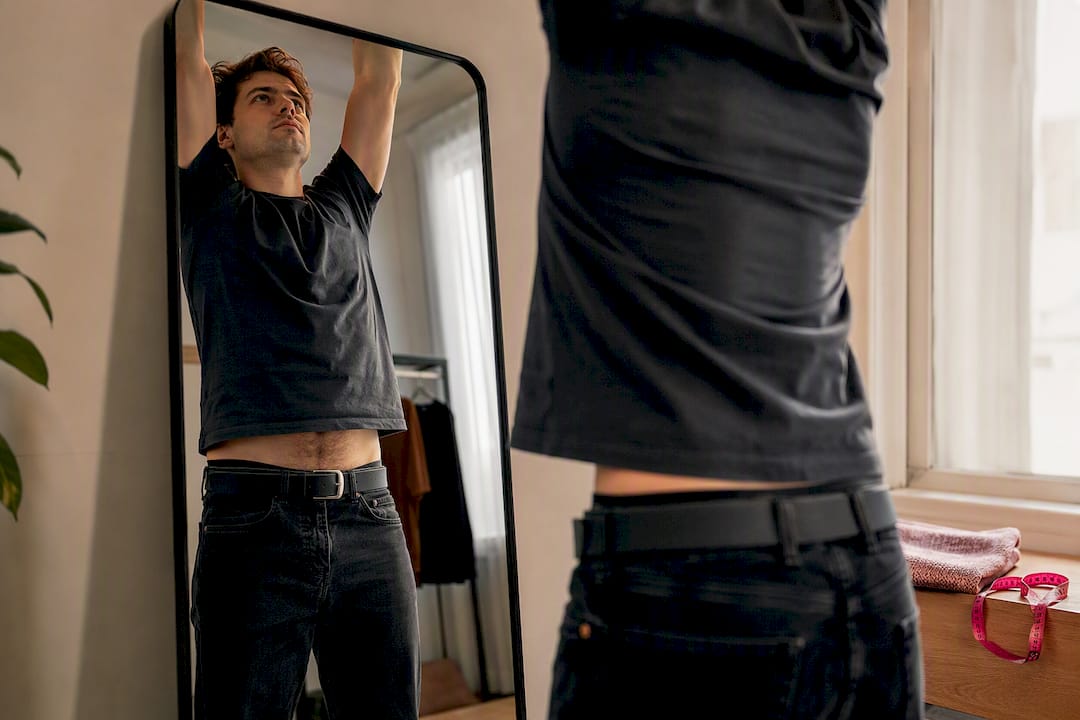
This two-check combo (shoulder position plus an active reach test) catches the majority of poor-fit purchases faster than staring at a size chart alone.
How To Measure A T-Shirt: Exact Flat Measurements
Brands build their size charts using flat measurements, meaning the shirt is laid on a table, buttoned up if it has buttons, and measured edge to edge with no stretching. This is why comparing your body measurements directly to a garment chart sometimes backfires. A garment chart tells you the shirt's dimensions, not how tightly it will hug your body.
Here's how to get your own benchmark numbers from a tee you already own and like the fit of:
- Chest: Lay the shirt flat, then measure straight across from armpit seam to armpit seam. Double that number for full chest circumference.
- Body length: Measure from the highest point of the shoulder seam straight down to the bottom hem.
- Shoulder width: Measure seam edge to seam edge across the back, where the sleeve attaches to the body.
- Sleeve length: Measure from the shoulder seam down to the end of the sleeve.
- Hem width (optional): Measure the bottom edge if you want to check for taper on fitted styles.
A few things make this more accurate: measure a shirt that already fits you well, keep the tape or ruler level so it doesn't sag, and measure everything twice to rule out a bad read. If you don't own a tee that fits the way you want, measure your body instead: wrap a tape around the fullest part of your chest, keeping it level and snug but not tight, and use that as your starting reference point.
How Do You Match A Body Type To A Size Chart?
Chest, or garment width, is the number that matters most. When you're comparing your benchmark measurement to a brand's size chart, aim to match closely. That single number predicts fit better than any other on the chart.
- If your chest measurement falls exactly between two sizes, let the fabric decide. Drapey, lightweight cotton can size up comfortably for a relaxed look. Structured or heavier fabric holds its shape better sized down for a cleaner silhouette.
- Small length mismatches (an inch or so shorter or longer than you'd like) are usually livable and easy to tuck or adjust.
- Shoulder width mismatches are not as forgivable. A shoulder seam sitting an inch or more off from your natural shoulder edge will look wrong no matter what the rest of the shirt does.
- No chart posted? Check customer photos and reviews first, since real buyers often mention true-to-size or runs-small feedback. Sizing line-ups, meaning photos of models of different heights and builds wearing the same size, are worth seeking out because they show you real-world drape instead of flat numbers.
Choosing The Right Fit For Your Body Type
Body type changes which measurement deserves your attention, and it changes what "correct size" even means for you.
- Slim builds: Sizing up isn't a shortcut to a good fit. Choose a genuinely tailored or slim cut if you want a close silhouette, or commit fully to an oversized style if that's the look you're after. A regular fit bought one size too big just looks baggy in the wrong places.
- Athletic builds: Shoulder and chest room come first. Tapered or athletic-cut tees give you room through the chest and shoulders while trimming the waist, so you avoid the boxy look a standard cut creates on a broader frame.
- Fuller midsections: Relaxed or straight cuts skip the clinging that structured fits create around the middle. Go slightly longer in body length too, since a too-short hem tends to ride up and expose more than intended.
- Short or tall frames: Body length matters more than chest width here. Look for short or tall size variants when a brand offers them. A regular-length tee on a tall frame often stops several inches higher on the torso than intended.
Pro Tip: If a brand offers both a regular and a "long" or "tall" version of the same tee, check the length difference in the chart before assuming the tall version is automatically better. Sometimes it's only an inch, which won't solve much.
Fabric Weight And Shrinkage: What Changes After The First Wash
The number on a size chart is only accurate until the first wash unless the brand states the fabric is pre-shrunk. Fabric weight, measured in GSM (grams per square meter), tells you a lot about how a shirt will drape and hold up.
- Mid-weight fabric balances structure and softness, which is why most everyday tees land in this range.
- 100% cotton tends to shrink more than blends, mostly in length, so budget for a slightly shorter fit after the first few washes unless pre-shrunk is stated on the product page.
- Cotton/poly or cotton/elastane blends resist shrinkage better and add stretch, which forgives a slightly tighter size choice.
- Care matters: wash cold, use a gentle cycle, and air dry or tumble on low heat. High heat is what warps collars and shrinks length fastest.
Five-Step Fit Test Before You Buy
Run through this on any product page, video, or in-store rack before you commit:
- Check where the shoulder seam sits in photos or on your own body.
- Compare the listed chest measurement to your benchmark tee.
- Do the reach test: raise your arms and watch whether the hem rides up.
- Look at where the sleeve lands. Mid-bicep with a loose (not tight) opening is the target.
- Picture how the print will sit once the shirt is actually on a body, not flat on a table.
That last step matters more for graphic tees than plain ones, since a great print on the wrong size can look stretched or cropped wrong.
Sizing Tips For Tattoo-Inspired And Custom Graphic Tees
Printed and customizable tees add a layer that plain tees don't have: the artwork itself has to survive the fit decision. A large chest print, like a full-spread dragon or a floral banner piece, can distort or stretch unevenly if the shirt is too tight across the chest. Sizing up slightly keeps the linework and color blocks intact instead of warping them across your torso.
- Print placement relative to the hem and neckline matters more on cropped or longer-length tees, since a size change shifts where the design sits on your body.
- Designs that wrap across side seams or curve around the body may need a size up, or a design adjustment, to avoid awkward stretching at the seam.
- If you're customizing a print, ask for a mock-up at your chosen size before ordering, especially for chest-spanning artwork.
Pro Tip: When in doubt on a custom order with a large chest graphic, size up one and check the mock-up. It's easier to preserve artwork proportions than to fix a stretched design after the shirt arrives.
Bebe Fashion's Take On Finding Your Size
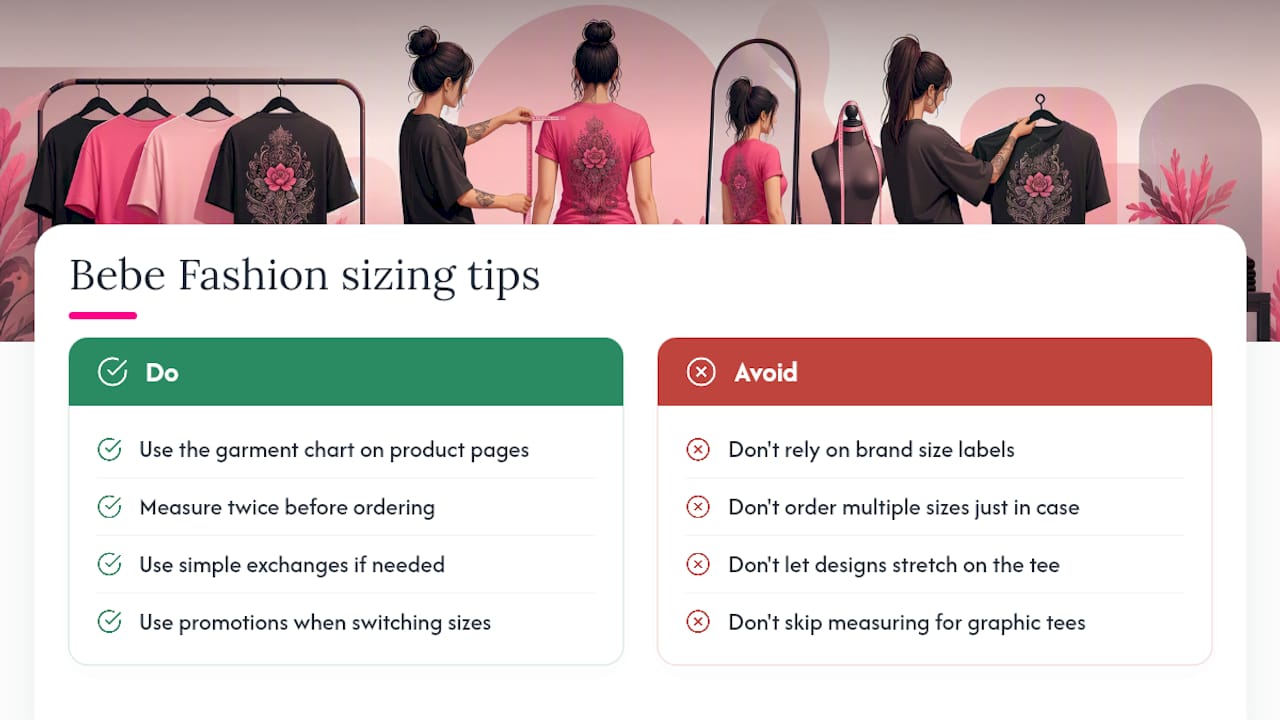
Bebe Fashion built its catalog around traditional tattoo art: dragons, cranes, moths, and floral banner pieces that deserve to sit on a tee without being stretched out of shape. Every product page carries a garment chart, so you're matching real numbers, not a size label that means something different from brand to brand. We'd rather a customer measure twice than order twice.
Exchanges are simple, and our promotions run often enough that switching sizes doesn't have to feel like a financial gamble. Sizing questions come up constantly with graphic-heavy designs, and getting it right the first time keeps the art looking the way it was drawn.
— Bebe
Shop Tattoo-Inspired Tees With Real Garment Charts
Bebe Fashion is the place to actually apply everything above, since every listing pairs a full garment chart with photos showing exactly where the print sits on the body.

Browse the Moth Moon Crest Sweatshirt or the Sparrow Flash Tattoo Hoodie to see how chest measurements line up with print placement before you buy. Prefer something lighter for warmer months? The Traditional Tattoo Moth & Rose design shows the same garment-chart detail across sizes. If a size ends up off once it arrives, exchanges are straightforward, and seasonal promotions make swapping sizes low-risk. Check the garment chart on any product page now, measure your benchmark tee, and order the size that actually matches your numbers.
Sources
This guide draws on measuring and fit methodology from Boring Label, Custom Ink, and Epic Fits, alongside garment chart examples from Bebe Fashion.
- T-Shirt Fit Guide: How a Tee Should Actually Fit — Boring Label
- Our Complete Custom T-shirt Sizing Guide: For Everyone & Every T-shirt Style - Custom Ink Blog
- Best Fitting t-shirts for Men | Flattering Styles Guide – EPIC FITS